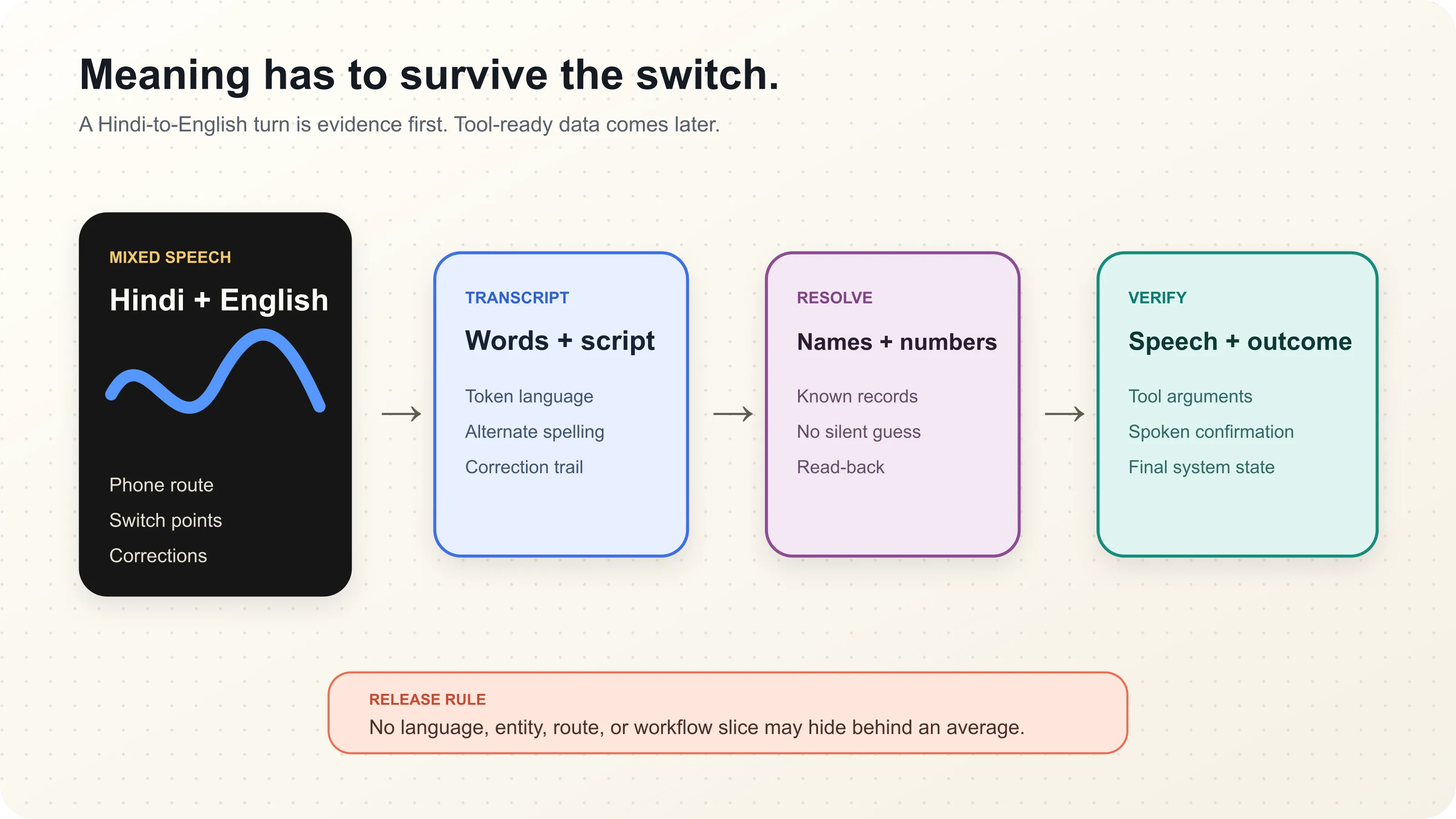
The Press 1 for Hindi era is dead: build fluid Hinglish voice AI
Design a low-latency Hinglish voice-agent pipeline that keeps mid-sentence language switches, entities, tools, and spoken replies aligned.
Read articleVoxeval blog
Practical guidance for evaluating real workflows, learning from failures, and deciding when a voice agent is ready to release.
Design a low-latency Hinglish voice-agent pipeline that keeps mid-sentence language switches, entities, tools, and spoken replies aligned.
Read articleFrom the desk
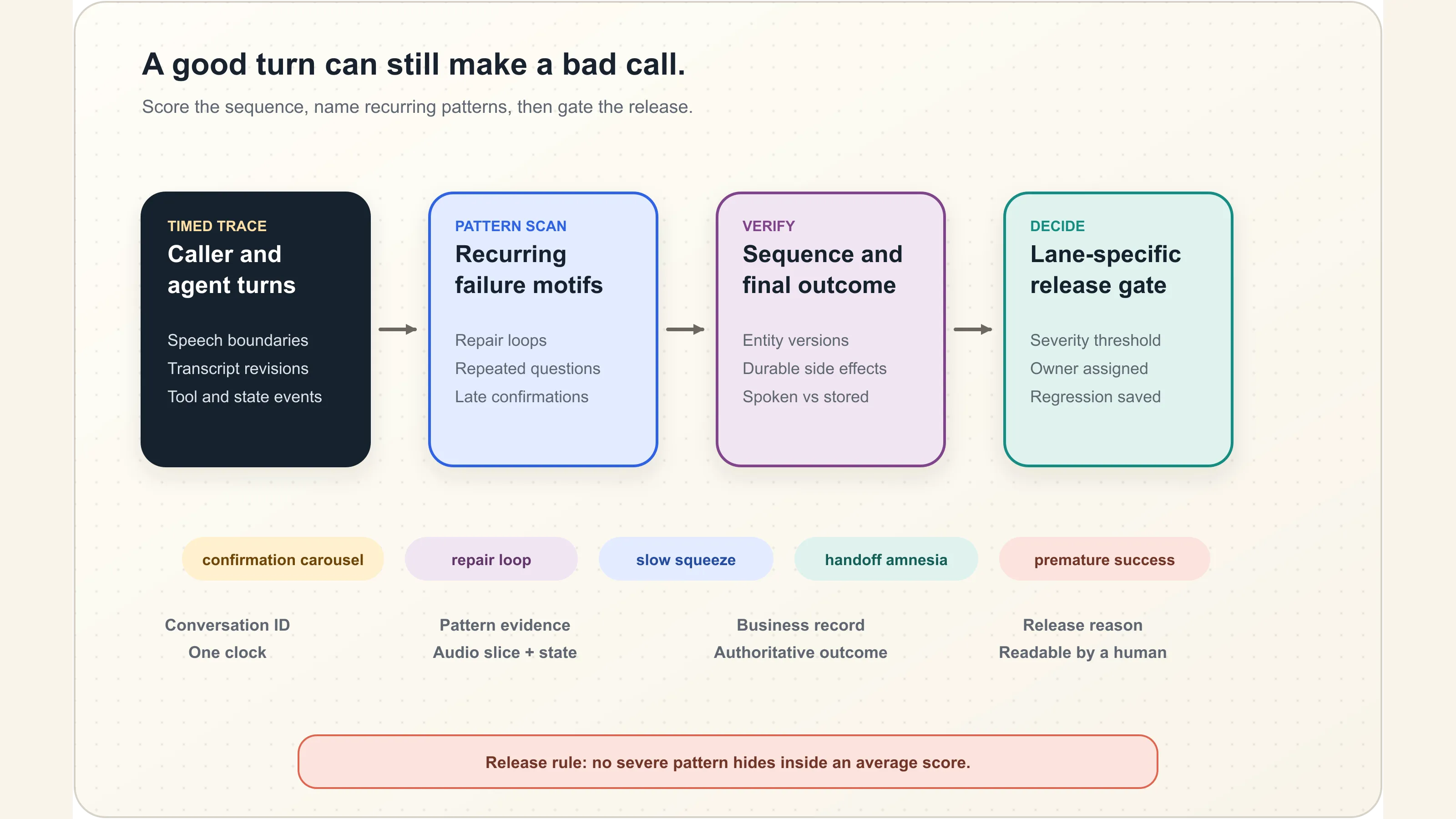
Build conversation-level voice-agent evaluation that catches repeated confirmations, timing drift, repair loops, and failures hidden by aggregate scores.
Read article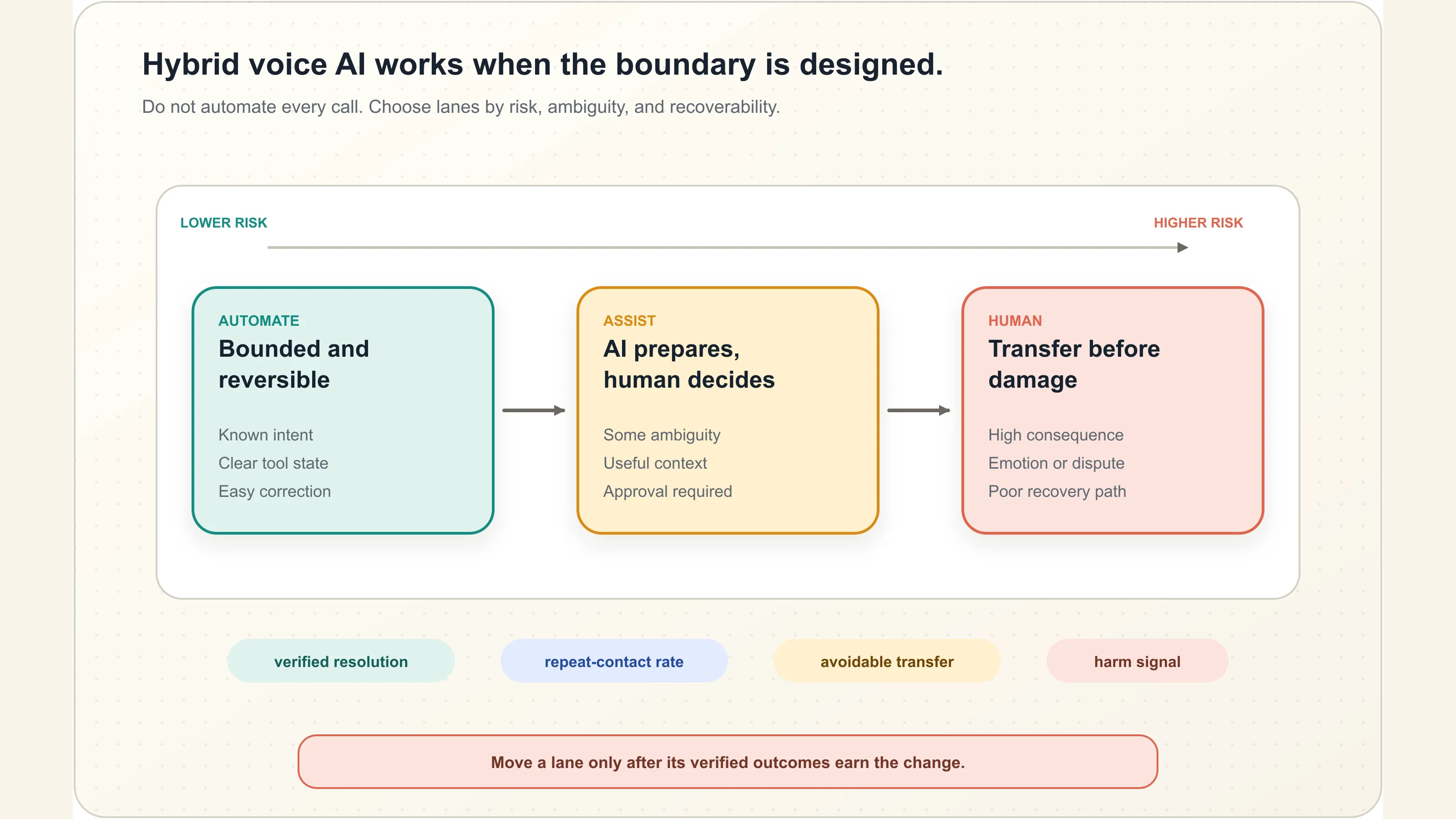
Route voice calls into full automation, assisted automation, or human-owned lanes using risk, ambiguity, customer effort, and recovery evidence before release.
Read article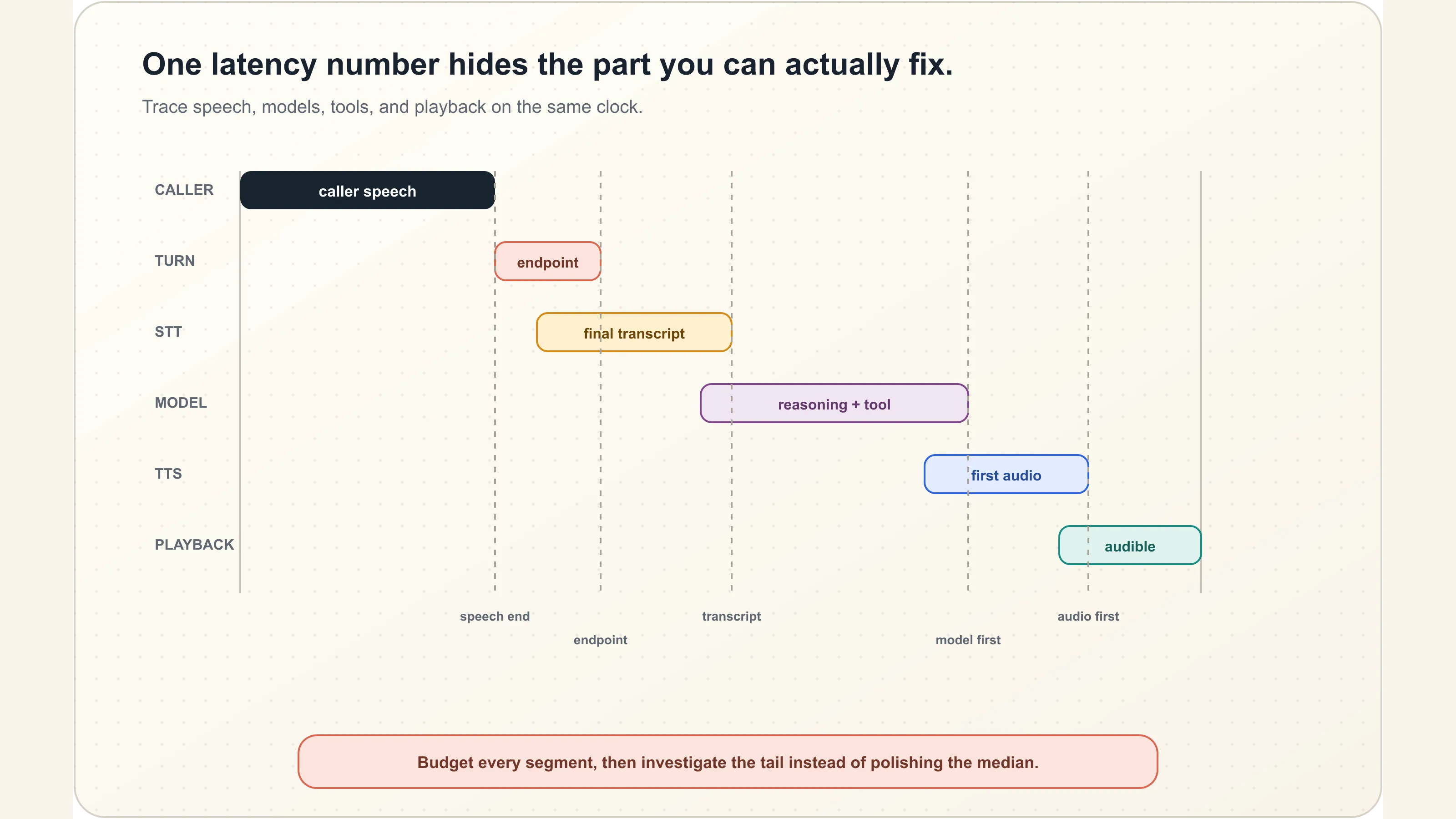
Trace voice-agent latency across capture, endpointing, transcription, model work, tools, synthesis, playback, and interruption recovery on live phone calls.
Read article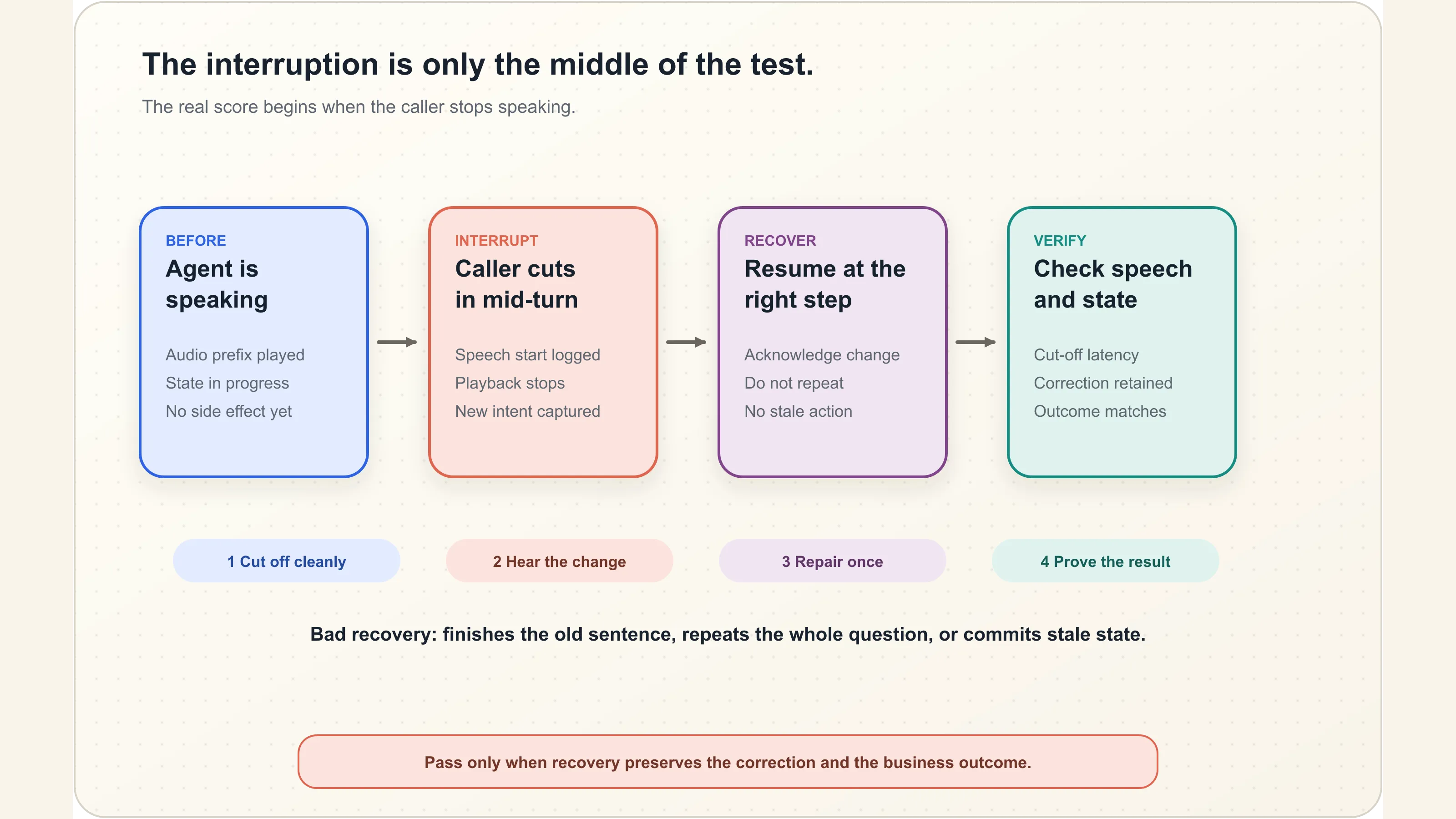
Test voice-agent interruption recovery after playback stops: workflow state, corrections, topic switches, repeated speech, and final business outcome.
Read article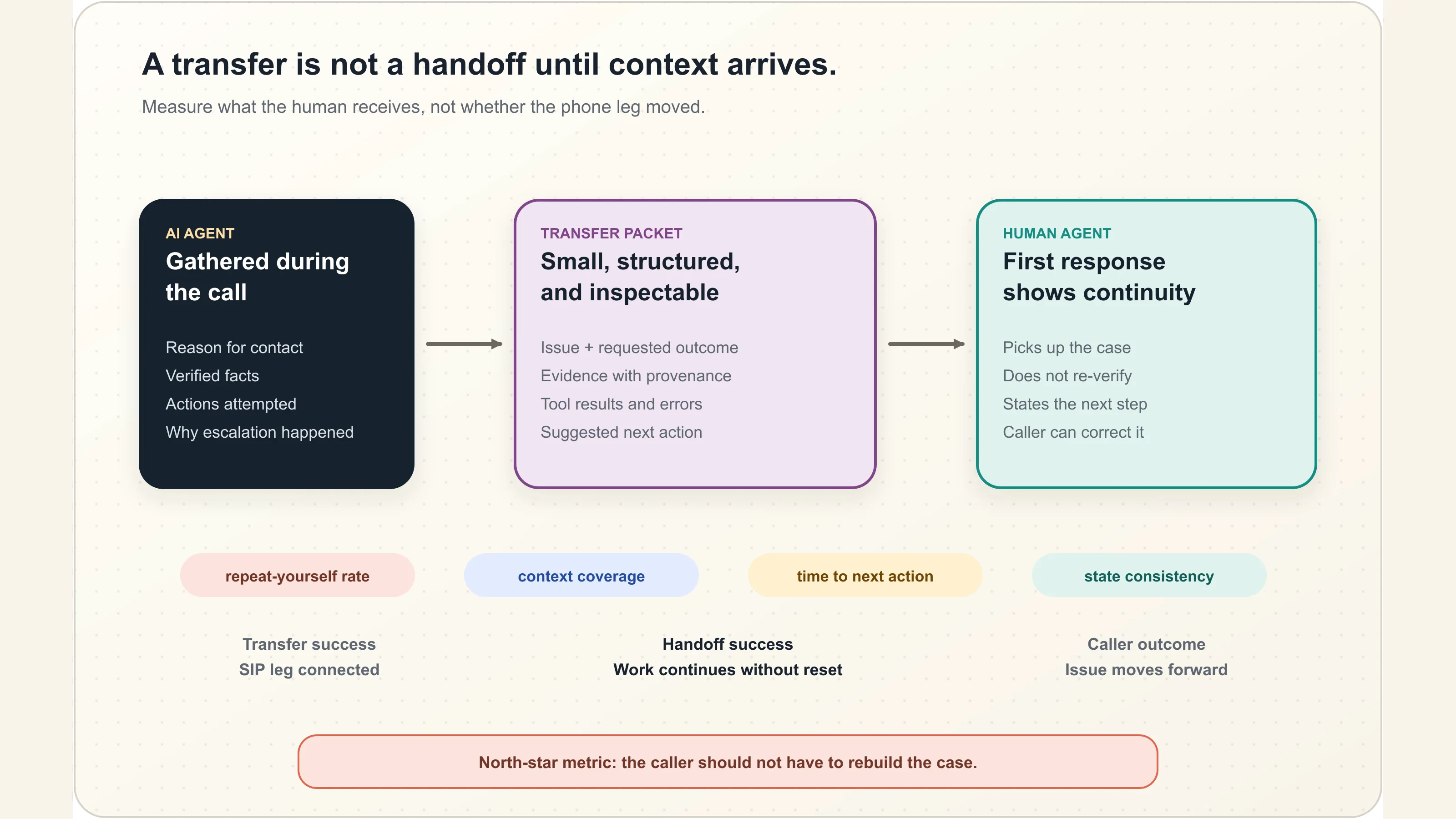
Measure whether AI-to-human voice handoffs preserve facts, attempted actions, caller intent, and momentum instead of forcing customers to restart in production.
Read article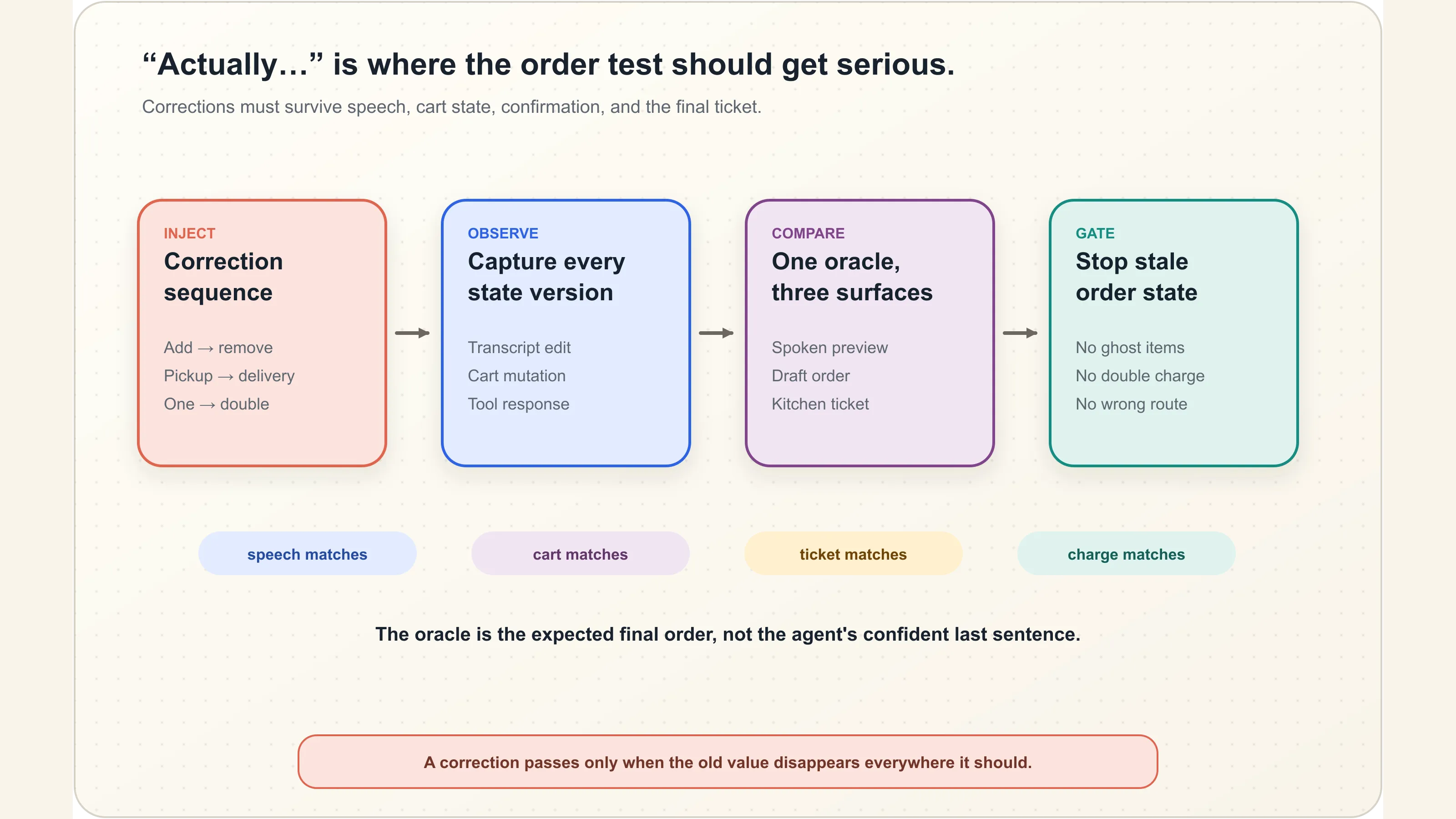
Test restaurant voice agents against corrections, duplicate items, modifiers, interruptions, stale writes, and final POS state before peak-hour launch.
Read article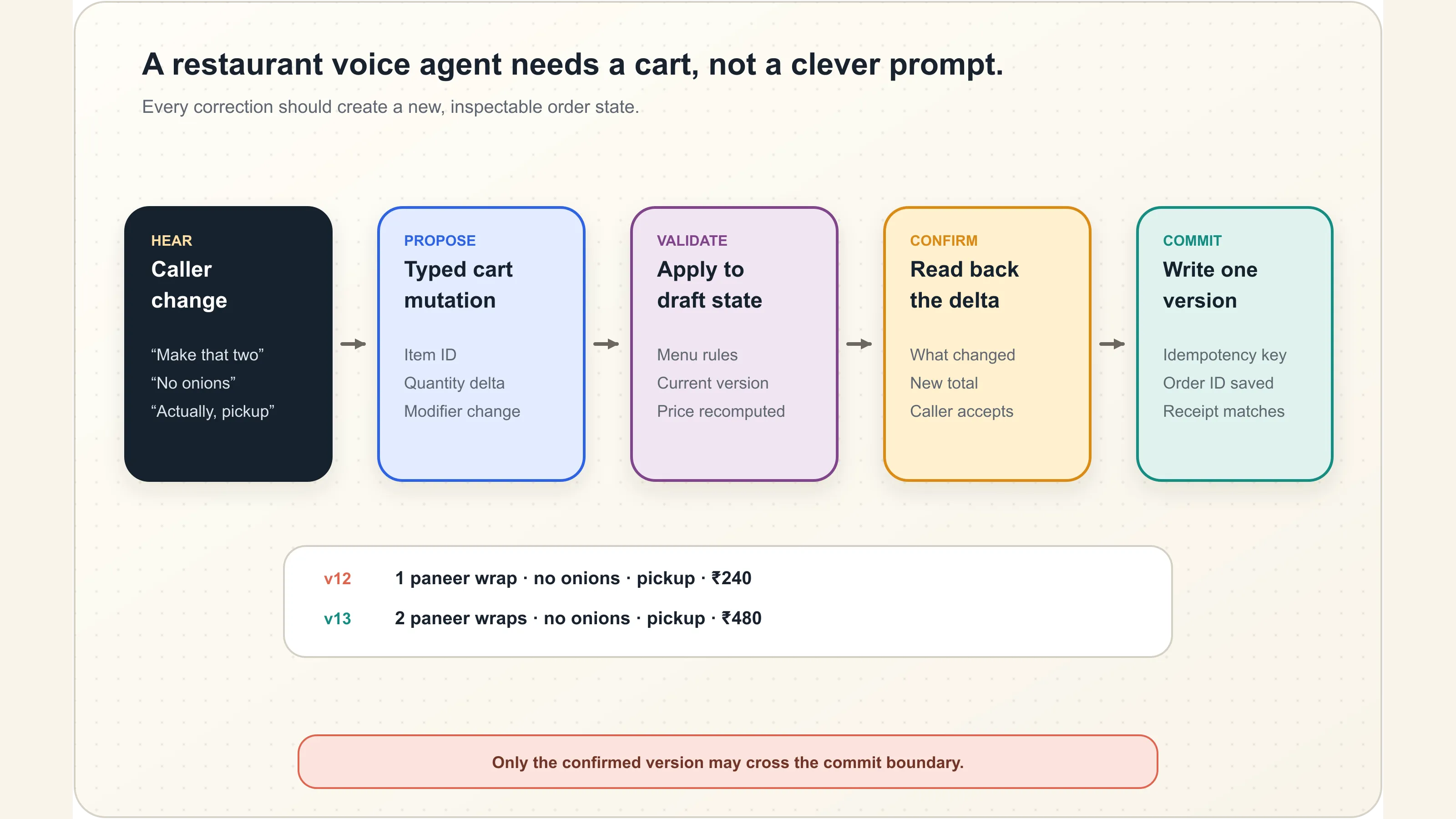
Design restaurant voice AI around a versioned order-state engine that survives modifiers, removals, substitutions, price changes, and POS writes at scale.
Read article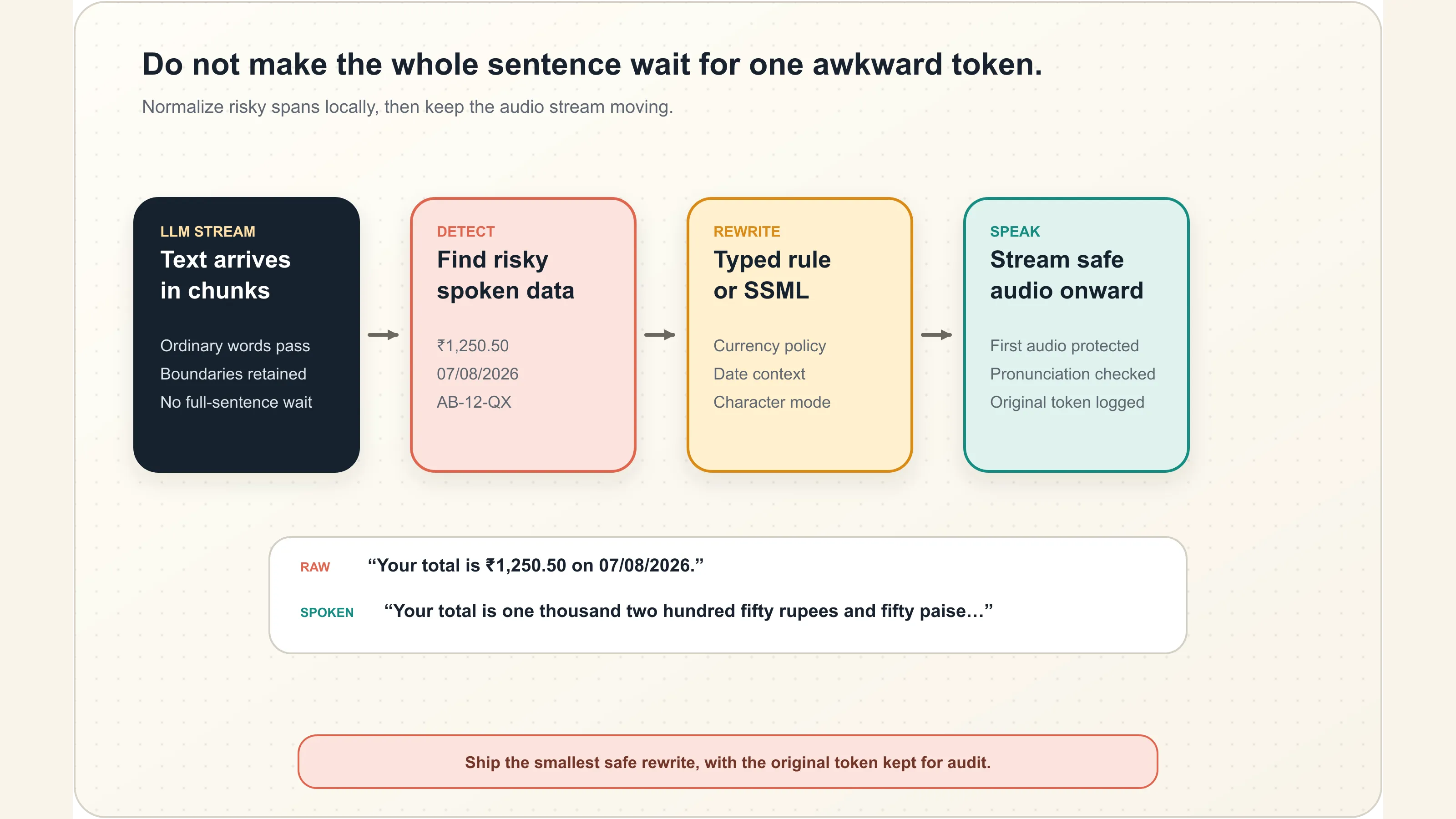
Design a streaming TTS normalization layer for money, dates, codes, URLs, and mixed-language text without adding a new wall of dead air during real calls.
Read article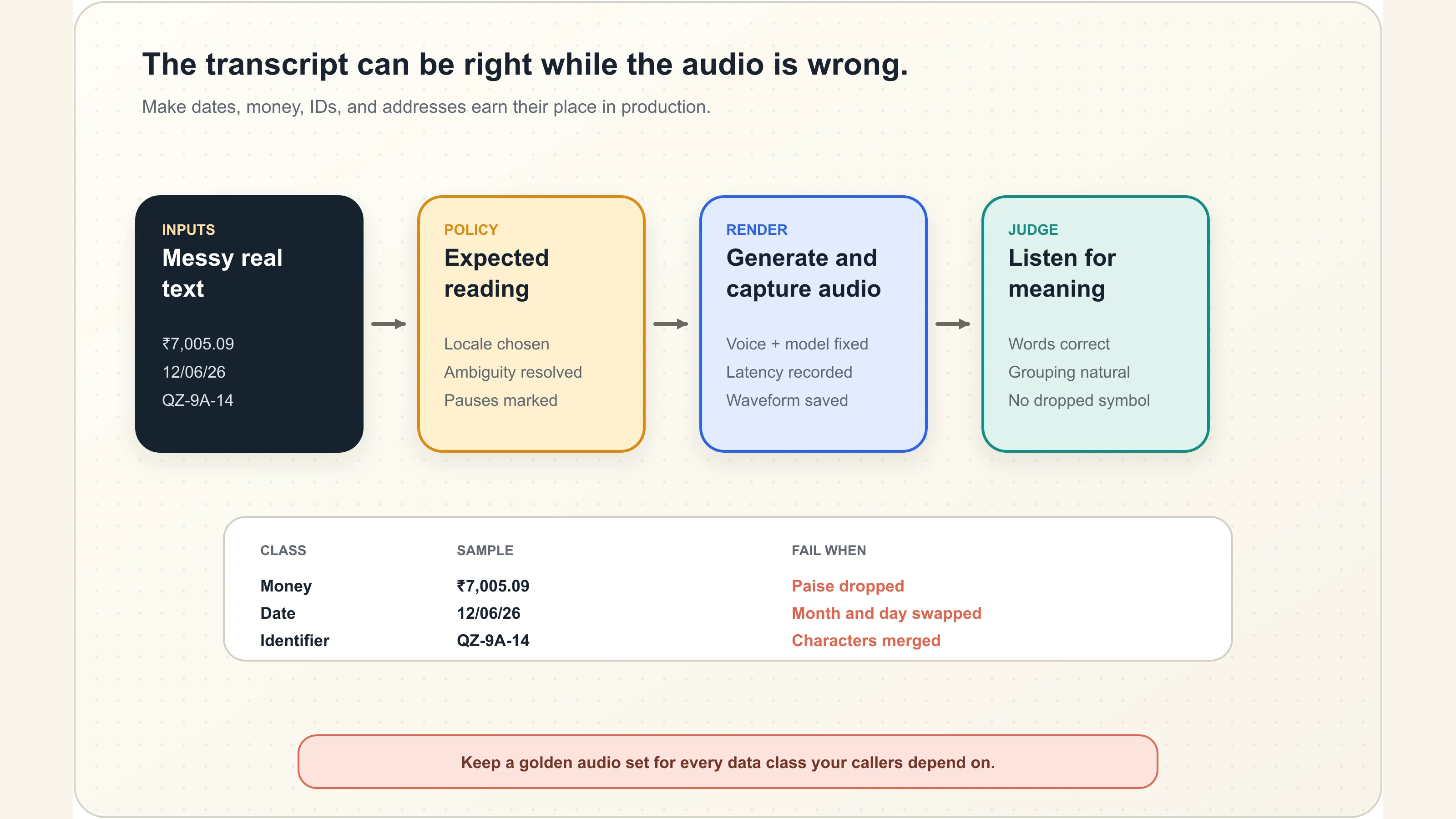
A reproducible streaming TTS test method for spoken dates, currencies, URLs, IDs, phone numbers, abbreviations, and mixed-language text before each release.
Read article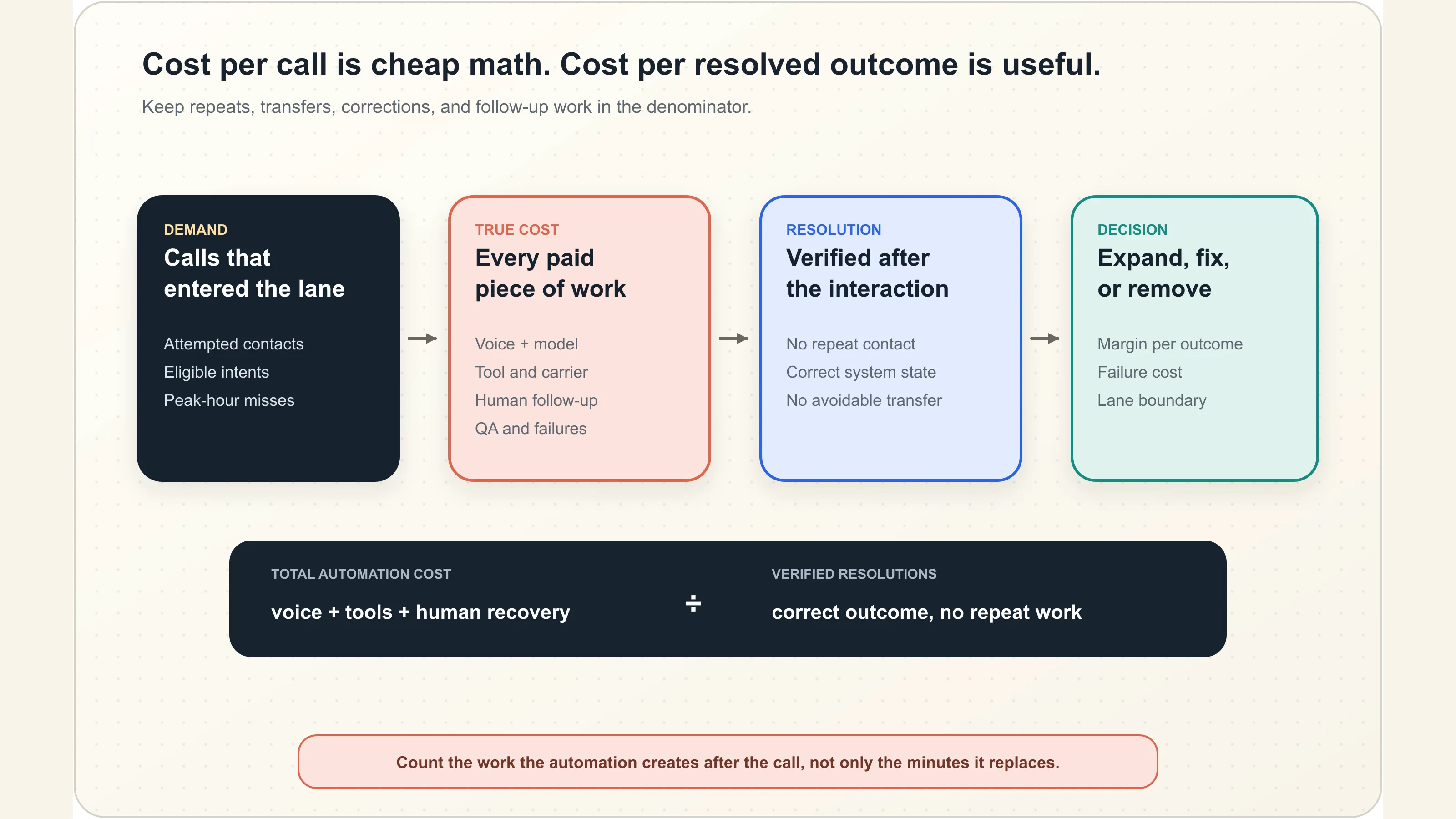
Build a voice AI ROI model around verified resolution, repeat contacts, human recovery, vendor spend, risk, and retained revenue instead of deflection.
Read article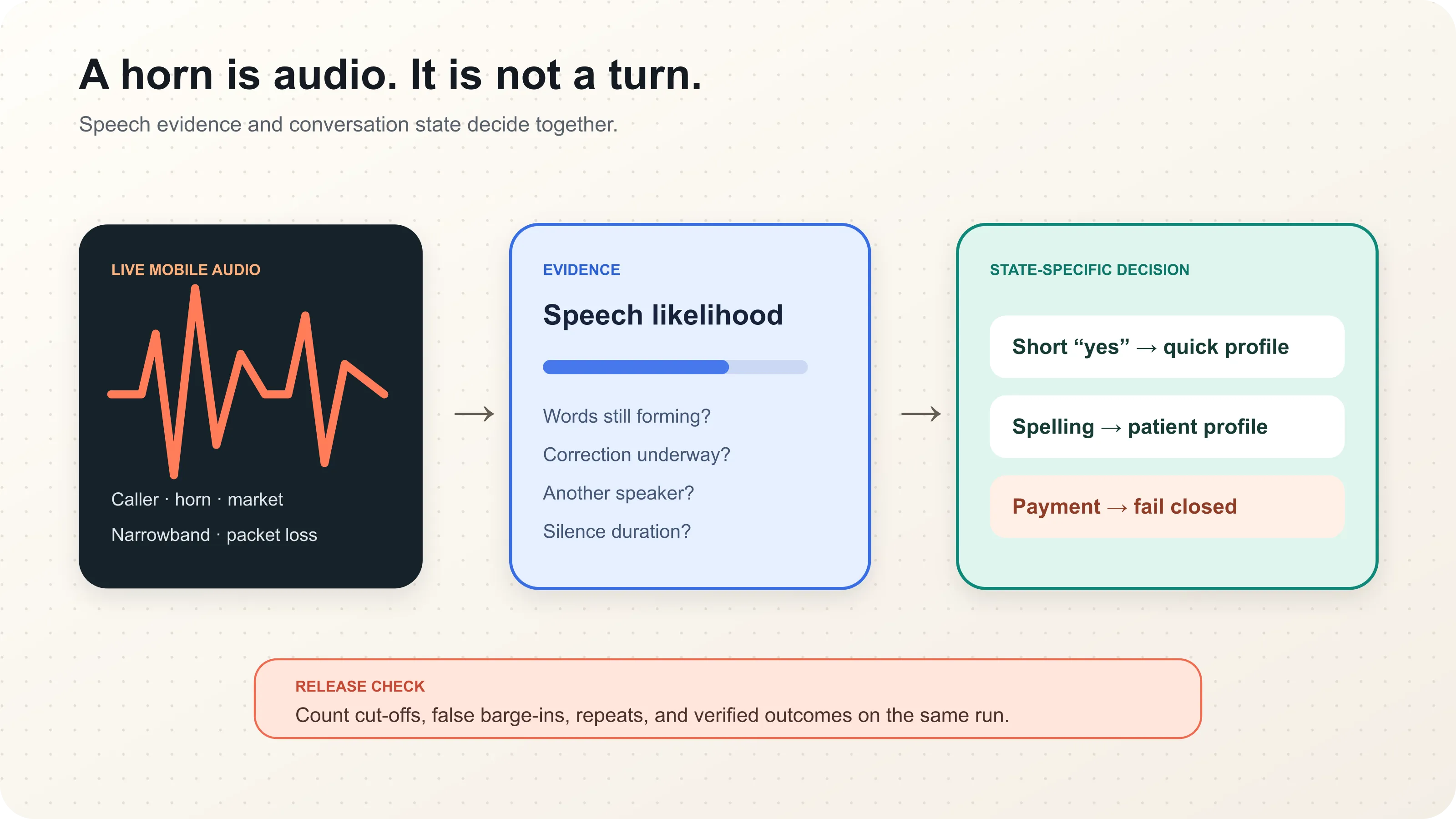
Tune voice activity detection, end-of-turn timing, and barge-in behavior for horns, market noise, second speakers, and unstable mobile audio.
Read article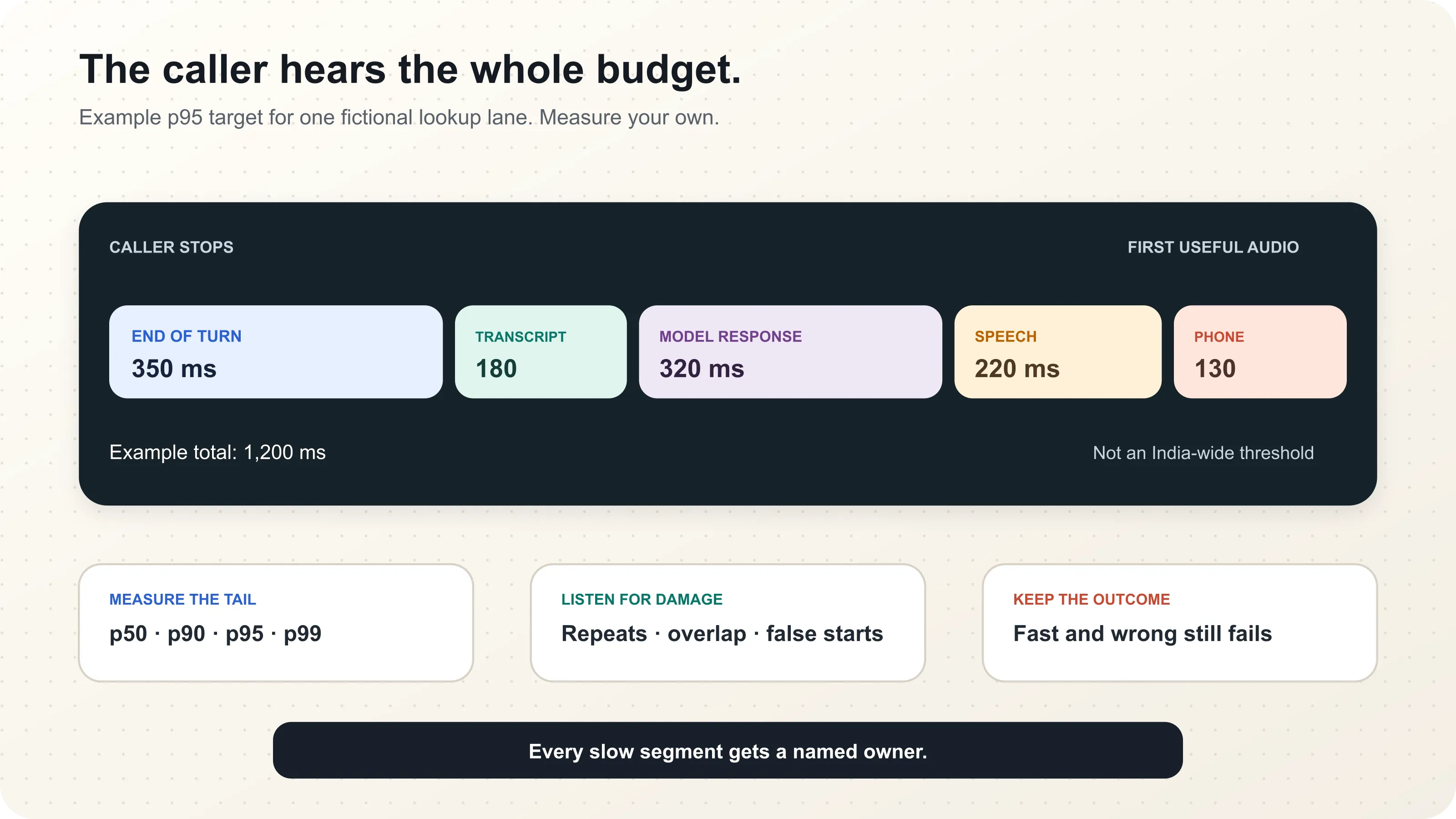
Measure where voice-agent delay comes from, set lane-specific latency budgets, and test the silences that make callers repeat themselves or hang up.
Read article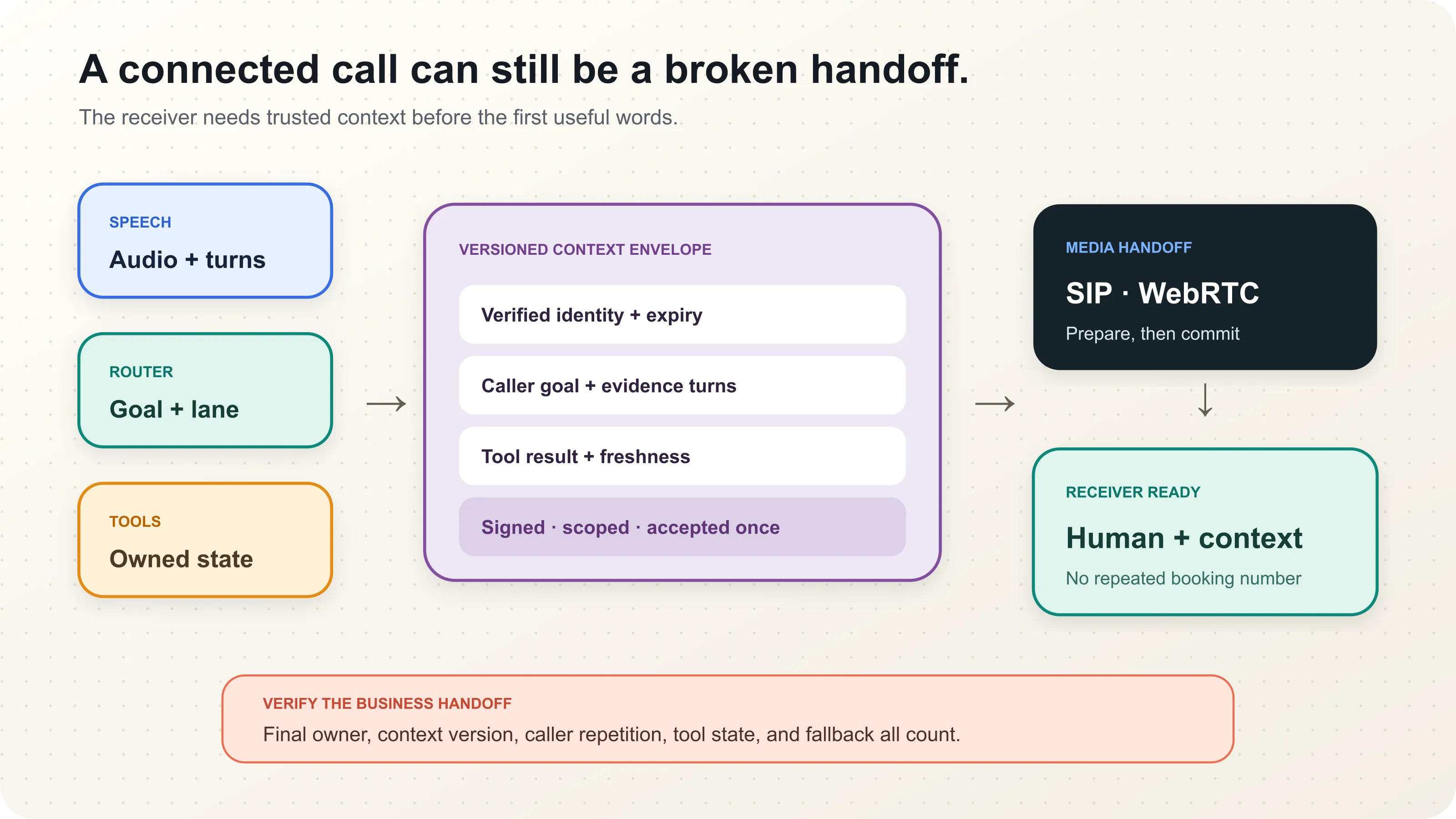
Keep caller context intact across speech models, specialist agents, tools, SIP transfers, and human BPO handoffs without inventing a giant shared prompt.
Read article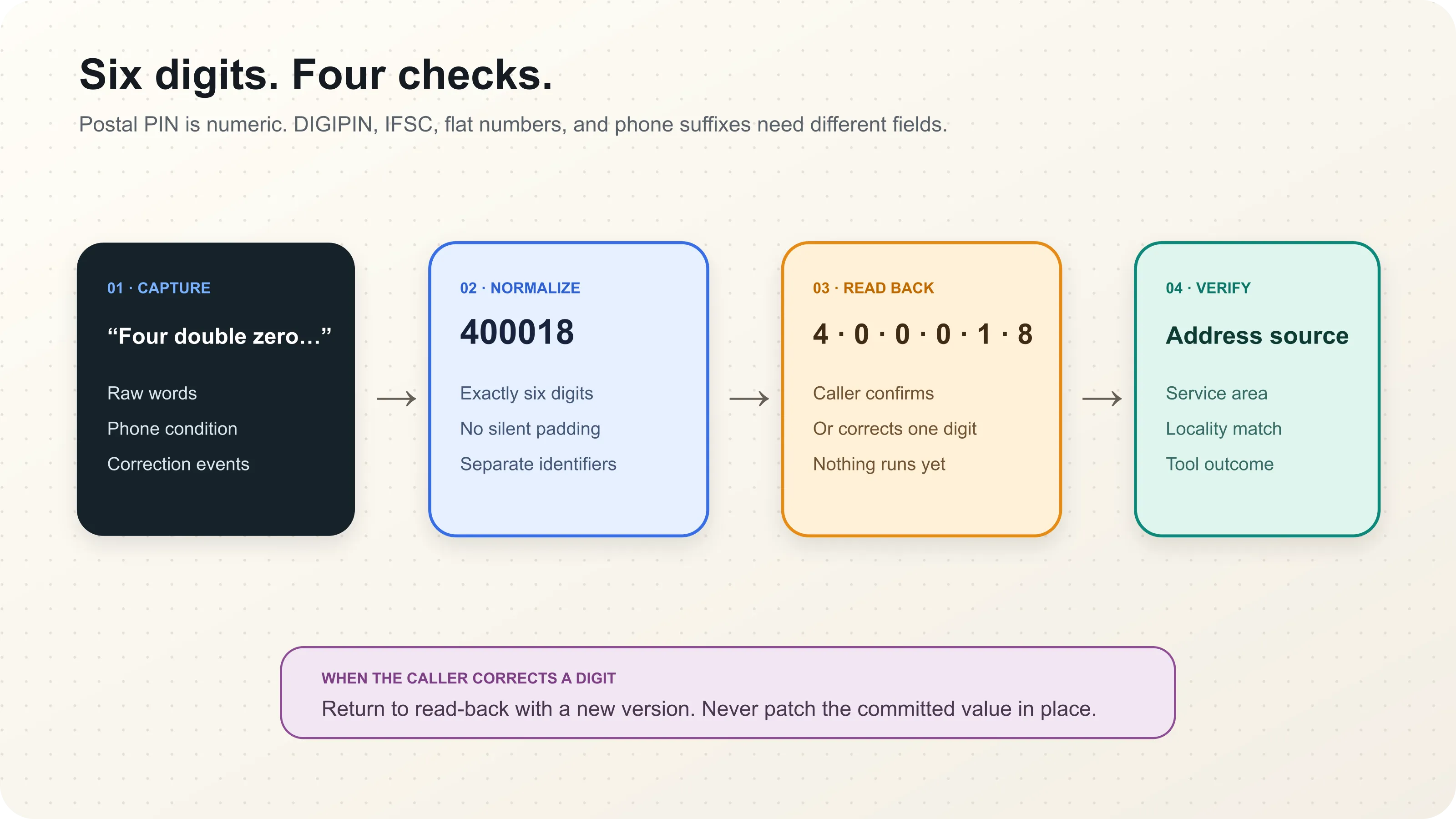
Stop Indian PIN codes, account fragments, and mixed digit strings from mutating between noisy mobile audio, transcripts, normalization, and APIs.
Read article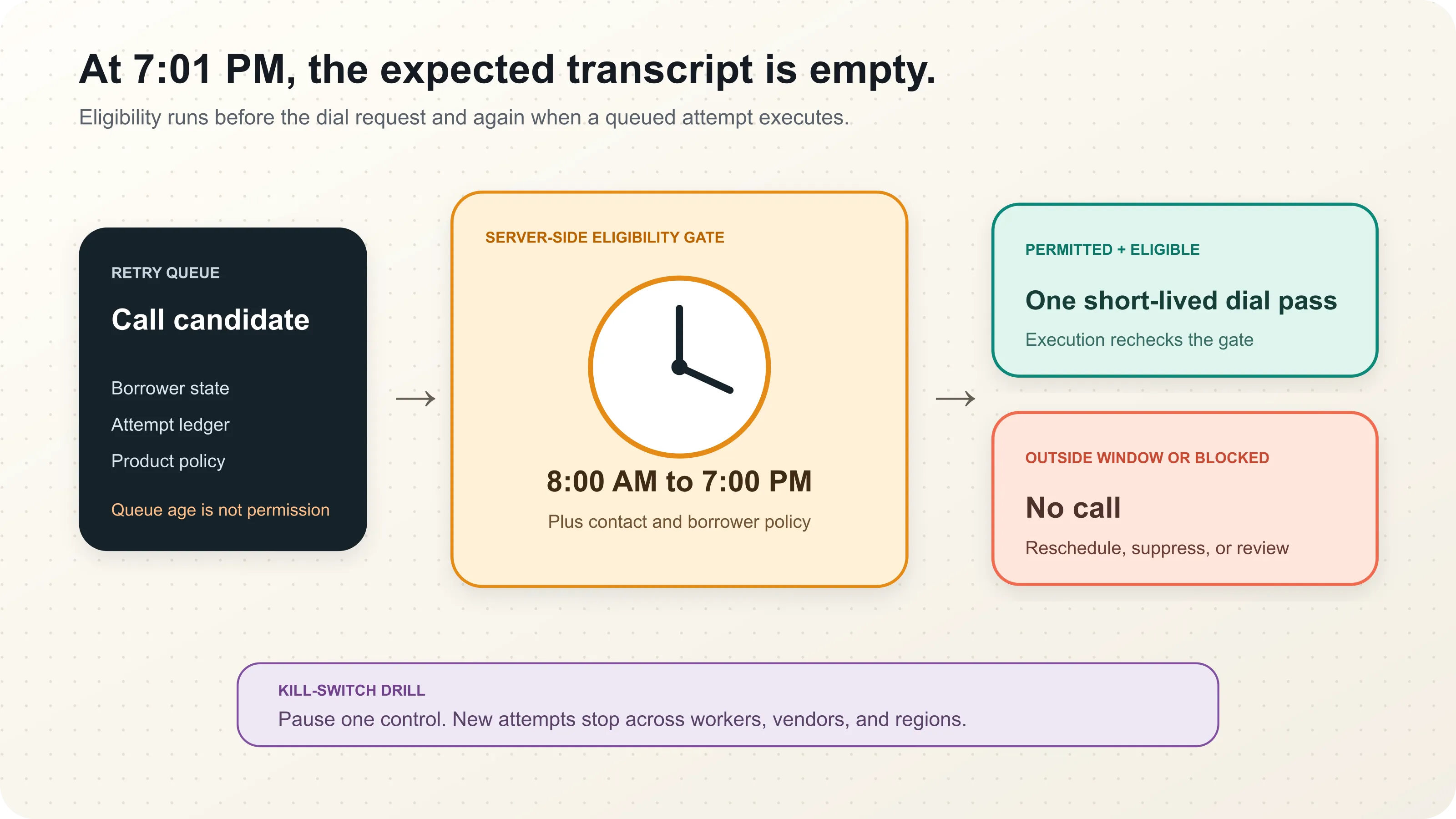
Build server-side time gates, retry limits, consent evidence, and release checks for Indian voice collection agents under RBI recovery-agent rules.
Read article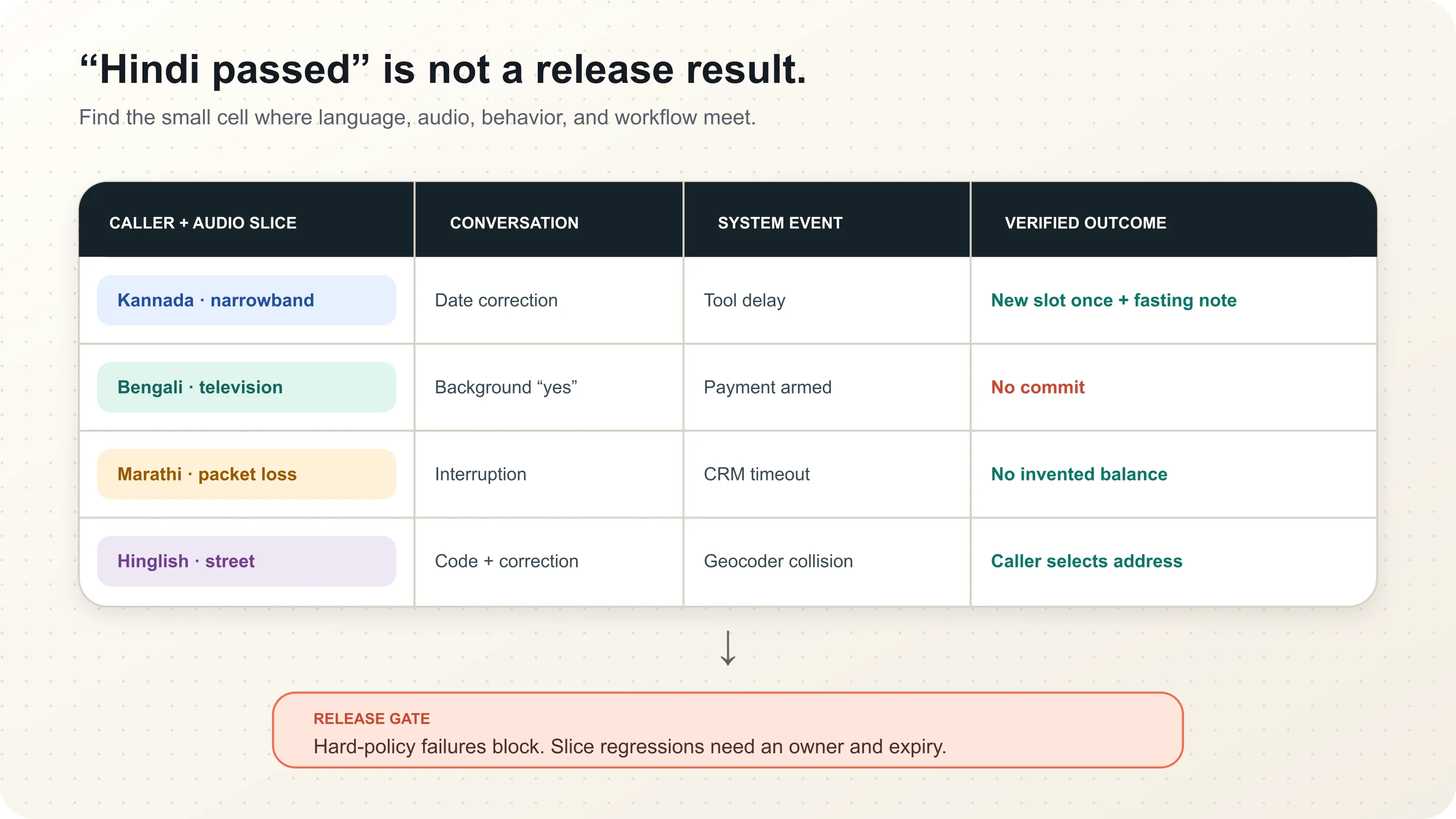
Build repeatable voice-agent regression gates across Indian languages, accents, noise, tools, and outcomes instead of trusting a few friendly demo calls.
Read article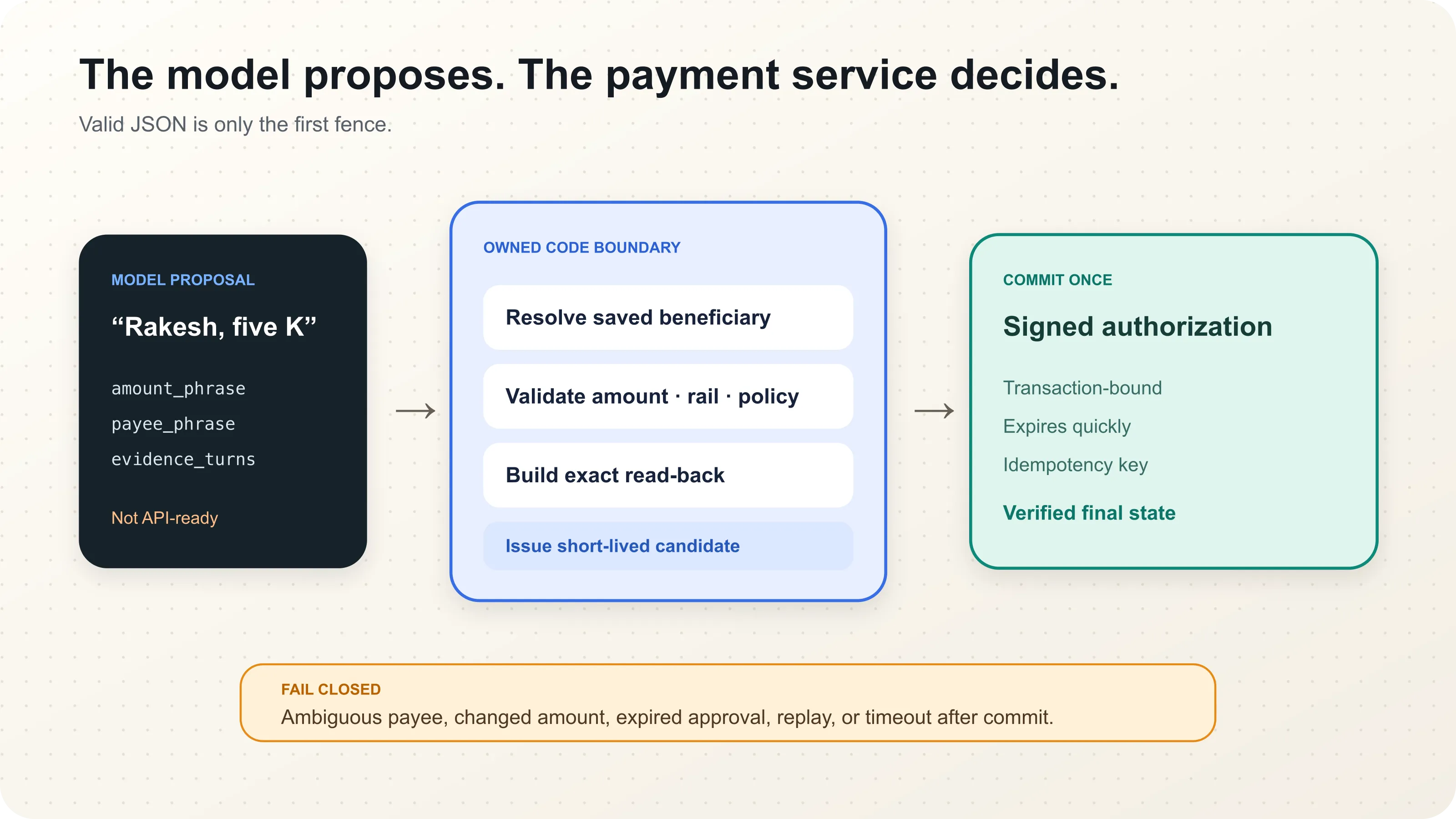
Turn messy spoken payment requests into validated, auditable banking API calls without handing the model the transaction boundary.
Read article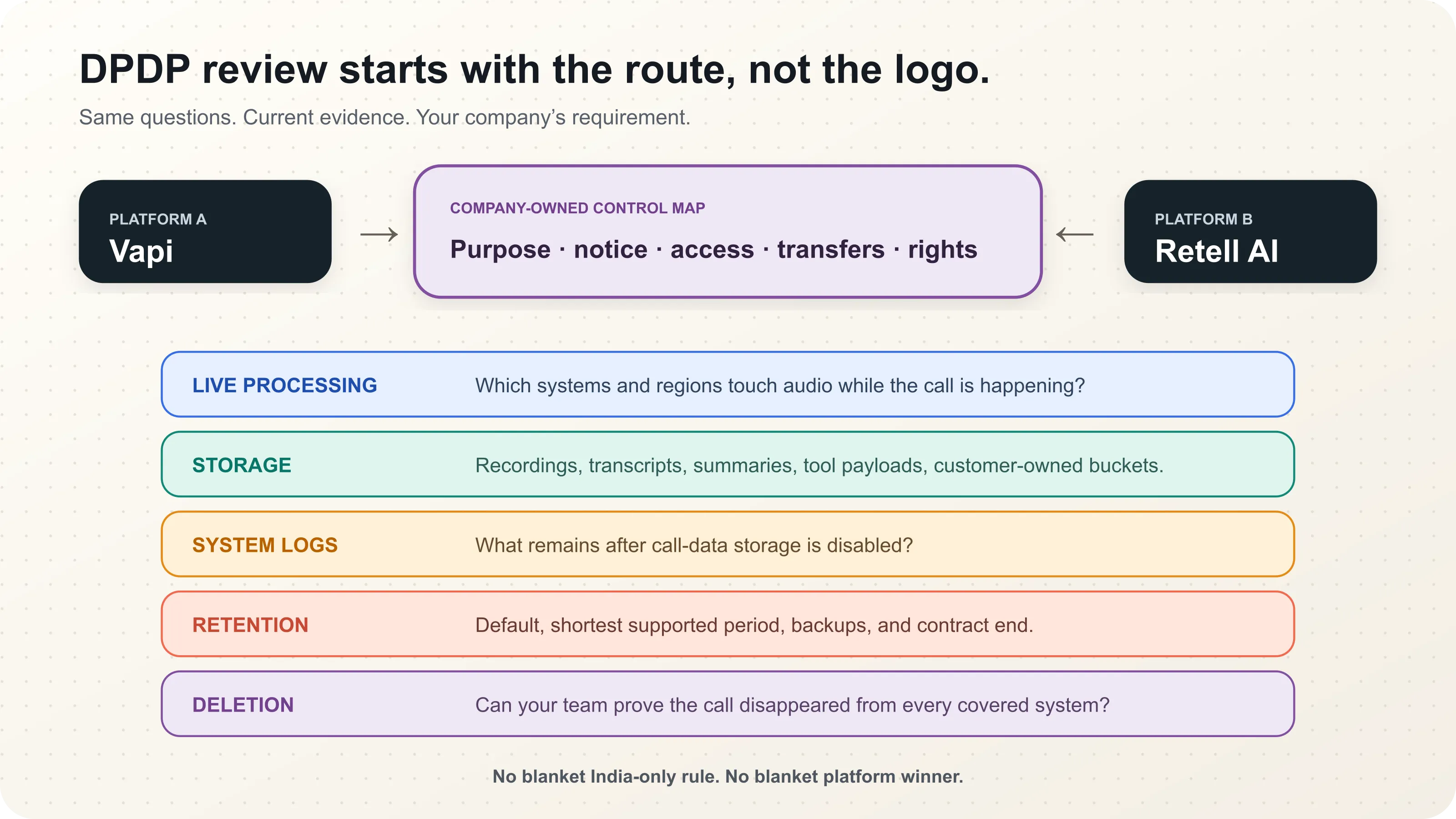
Compare Vapi and Retell AI for Indian enterprise voice workloads across storage, processing, retention, deletion, vendors, and DPDP obligations.
Read article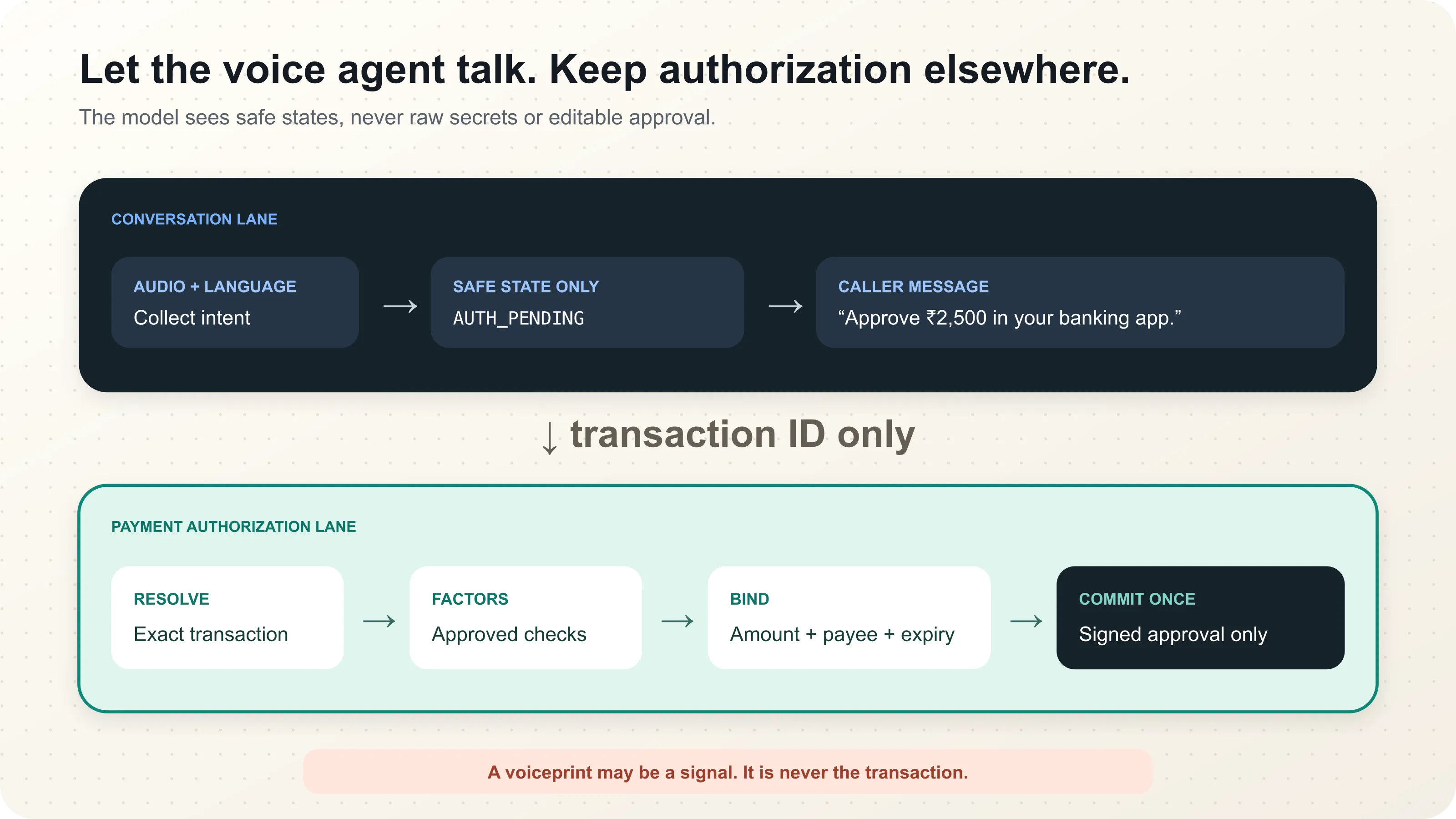
Place voiceprints, OTPs, transaction binding, anti-spoof checks, and telecom risk signals in the right control plane for Indian payment voice agents.
Read article
Calibrate an AI judge for voice-agent calls with human labels, evidence contracts, confusion matrices, thresholds, abstention, audio review, and versioning.
Read article
Map sensitive voice data across audio, transcripts, models, tools, logs, vendors, storage, redaction, access, retention, evaluation, and incident response.
Read article
Turn an SOP into voice-agent scenarios, assertions, evidence, severity, and release rules without reducing a real workflow to a prompt checklist.
Read article
Test Hindi-English voice agents across code-switching, names, numbers, scripts, telephony, tool arguments, pronunciation, repair, and verified outcomes.
Read article
A practical voice agent evaluation framework for scoring outcomes, critical entities, tool calls, policy, latency, interruptions, handoffs, and final state.
Read article
Compare speech-to-text providers on consented calls using WER, critical entities, partial stability, endpoint timing, code-switching, cost, and failure rate.
Read article
Take a LiveKit voice agent past the quickstart with 25 behavior, tool, safety, audio, telephony, and handoff checks before its first customer call.
Read article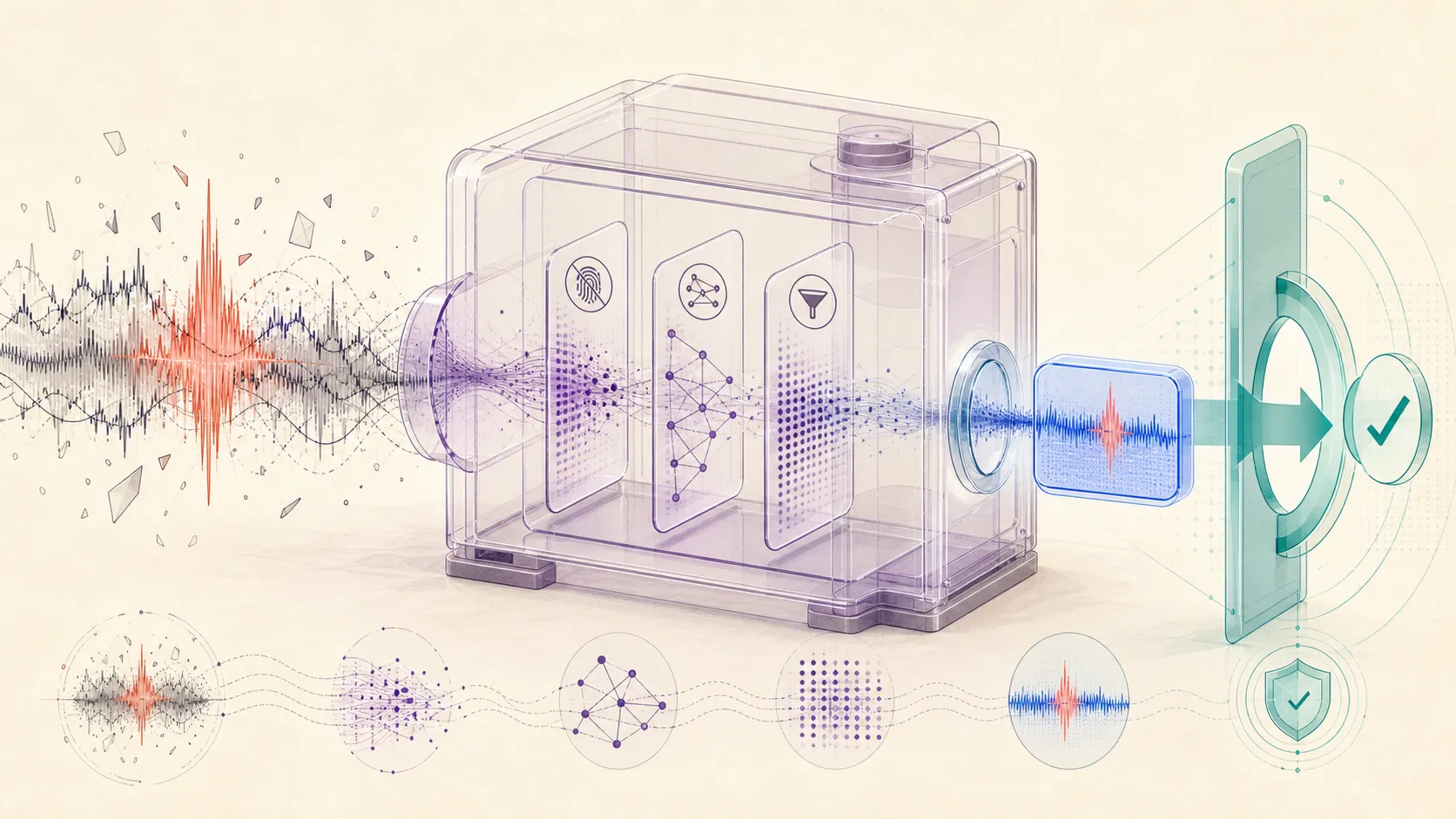
Turn an approved, redacted voice-agent incident into a minimal replay, layered assertions, ownership, and a permanent release gate without raw customer data.
Read article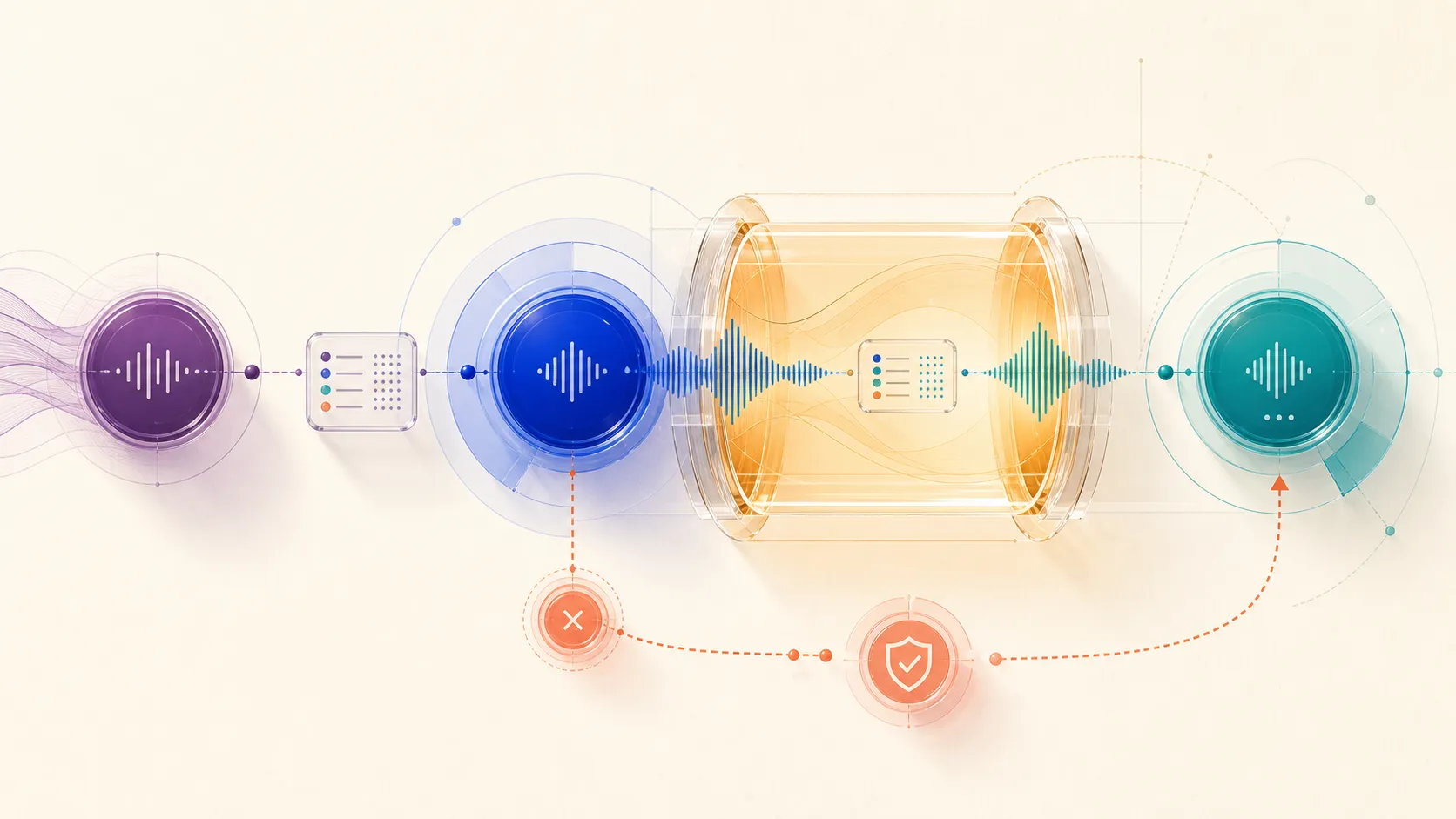
Test voice-agent handoffs end to end across trigger accuracy, caller explanation, routing, context transfer, hold, connection, fallback, and human resolution.
Read article
Compare Vapi, Retell, LiveKit, and Pipecat by control, telephony, deployment, testing, and team fit before choosing a production voice AI stack.
Read article
A practical guide to evaluating overlap, backchannels, barge-in, silence, tool timing, latency, and outcomes in full-duplex voice agents.
Read article
What three recent voice-agent benchmarks measure, what their results cannot prove, and how to turn their dimensions into release-ready domain evals.
Read article
A vendor-neutral playbook for separating conversation quality from business correctness and turning voice-agent incidents into permanent regression gates.
Read article